
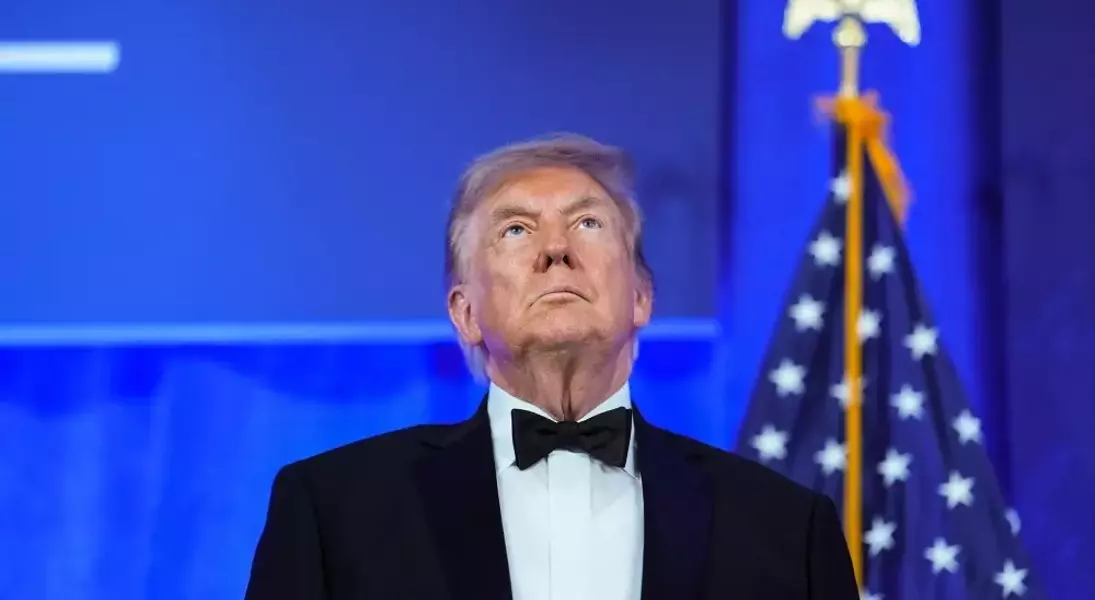
Former President Donald Trump's address at the White House Correspondents' Dinner, a rescheduled gathering after a security breach earlier in the year, was widely noted for its peculiar nature. His delivery was hesitant, and the message conveyed a sense of bitterness towards a press corps he often criticizes. This performance underscored a public figure increasingly confronted by his waning popularity, a reality that appeared to fuel his disjointed remarks. The event became a platform for Trump to air grievances and seemingly redefine the evening's purpose, moving away from traditional humor and towards a more confrontational style. His remarks, punctuated by complaints about journalistic awards and criticisms of specific reporters, revealed a deep-seated desire for approval clashing with an increasingly adversarial relationship with the media.
The evening’s atmosphere was notably subdued, lacking the customary lightheartedness. Trump, acknowledging the unique circumstances, began by questioning the appropriate tone for the event, oscillating between seriousness and an attempt at comedy. However, his underlying frustrations quickly surfaced as he criticized the awards presented to journalists whose work had been critical of his administration. This behavior, consistent with past patterns, suggested a leader deeply affected by negative public perception. His speech, a blend of rambling thoughts and recycled criticisms against political opponents and cultural figures, failed to resonate with an audience expecting a different kind of engagement. The event, once a symbol of the playful tension between the presidency and the press, transformed into a reflection of Trump’s ongoing struggle with public image and media scrutiny.
Trump's White House Correspondents' Dinner: A Peculiar Performance
Donald Trump's address at the White House Correspondents' Dinner was characterized by its unconventional style and content, diverging sharply from the event's historical norms. The rescheduled dinner, held months after an earlier security incident, saw Trump grappling with how to approach the occasion. He questioned whether to be comedic or serious, but ultimately delivered a speech that was widely perceived as bizarre. A significant portion of his remarks was dedicated to his dissatisfaction with the awards presented to journalists, many of whom had reported critically on his administration. This focus on personal grievances and a perceived lack of appreciation highlighted a public figure struggling with declining approval ratings and a deep-seated need for validation. His delivery, at times halting and rambling, suggested a speaker less interested in engaging with the press in a traditional manner and more intent on using the platform to voice his resentments.
The former president's performance offered a stark illustration of his ongoing battle with public perception and his complex relationship with the media. Despite the traditional lighthearted spirit of the dinner, Trump's speech was devoid of genuine humor, instead veering into familiar territory of criticism against journalists and political adversaries. He specifically named reporters and expressed discontent over their recognition, underscoring his belief that their work was adversarial. This approach alienated much of the audience, who had come to expect a blend of self-deprecating humor and political jabs. Trump's inability to connect with the room on a comedic level, coupled with his persistent focus on his own popularity and past perceived slights, created an atmosphere of awkwardness and discomfort. The evening served as a poignant reminder of a public figure increasingly isolated by his own narrative, struggling to adapt to contexts that demand a departure from his usual confrontational style.
The Spiral of Public Disapproval and Media Antagonism
The reception of Trump's speech at the White House Correspondents' Dinner revealed a public figure caught in a "spiral" of declining popularity and increasing antagonism towards the media. His performance, a repeat of a previously planned address, showcased a man acutely aware of his diminishing approval. Instead of leveraging the platform for humor or reconciliation, Trump used it to express his frustration with journalists who had received awards for reporting that was often critical of his presidency. This signaled a broader struggle with how his public image was being shaped, and his persistent efforts to reframe reality according to his own perceptions. The event inadvertently highlighted his perceived vulnerability and his reactive nature when faced with widespread disapproval, leading to a speech that felt more like a defensive monologue than an engaging address.
Trump's recurring themes, including his long-standing grievances against awards bodies and public figures like Rosie O'Donnell, indicated a reliance on past conflicts rather than a forward-looking vision. His attempts at humor fell flat, with the audience reportedly unamused by his jokes, some of which he attributed to unnamed writers. This lack of connection underscored a disconnect between his self-perception and the public's current mood, especially given pressing national issues like inflation and international conflicts. The event, once a significant gathering for the intersection of politics and journalism, devolved into a largely "vexed, pointless hour," as described by observers. The former president's deflated delivery and apparent preoccupation with who had received awards earlier in the evening suggested a deep-seated insecurity and a continued obsession with validation. Ultimately, the dinner became a stark reflection of a political figure struggling to adapt to a changing landscape, consistently returning to old battles and failing to resonate with a public yearning for something new.